 Au quotidien
 Nature - environnement
The following text is the English translation of the article "Mais quelle est donc cette manie de vouloir à tout prix des loups, des lynx partout en Europe ?" It critiques the strict protection and reintroduction projects for the lynx in France. The ecological arguments often put forward ─ keystone species, umbrella species, or flag species ─ are weak, largely irrelevant, and inconsistent. In European landscapes heavily altered by human activity, the lynx does not effectively regulate ecosystems, does not guarantee the protection of other species, and conflicts with livestock farming, hunting, and certain protected species. The article concludes that existing lynx populations should be respected but not given sanctuary status. Furthermore, this specific case highlights the dilemma of conservation biology when the goal is no longer simply to conserve and repair damaged nature, but to manage it.

Foreword
In France, a good country woman kills a lynx while defending her hen, the lynx is mourned, the judges condemn the lady! Three months suspended prison sentence and more than 30,000 euros in damages to the environmental associations that joined the case as civil parties, an extremely heavy sentence when it is not an act of poaching (Leca 2026).
But on social media, a whole pack of self-appointed vigilantes ─ mostly women ─ unleashed their fury against this woman, screaming that the sentence was not harsh enough, demanding prison time, and, for the most fervent, the death penalty! Certainly, they shouted from behind their keyboards, but they did not go looking for a rope to hang her. Their profound cowardice prevented them from carrying out their plan, thank goodness! Animal rights groups, for their part, rejoiced in this judgment, especially since they profited from the damages awarded to them. There were eight at the quarry to divide the money.
It saddens me. This woman had five hens that she watched grow up and loved. She told the judge during her trial, "It's a pet. I love my hen, just like you love your cat or your dog." The hen attacked by the lynx died. Her name was Marie-Thérèse. Aside from this woman, who cares? She can't be very wealthy, and on top of grieving for her pet, she has to deal with a huge expense, not to mention the hordes of idiots of both sexes who have dragged her through the mud. "After a baby lynx, a child?" one internet user wondered. Really!
Chickens are not an endangered species, but neither is the lynx on a global scale, even though it is classified as endangered (VU) on the IUCN Red List in France. It is the global level that matters when considering a species' chances of survival. In France, the lynx has few chances. It was artificially reintroduced in Switzerland, from where it returned to France to a territory that is too fragmented and no longer suitable for it. It is not universally popular, although most of those who oppose it remain silent out of caution.
In Switzerland, about fifty kilometers away, the courts have authorized a culling of a lynx (Voix du Jura 28/05/2026). Lynx prey on livestock and take a large share of the game in two cantons. Obtaining authorization for culling is very difficult. One cull was authorized ONE lynx that was ravaging the flocks. Lynx protectors thwarted it in the field after losing in court.
What's happening in Switzerland is unlikely to happen in France, at least not in the immediate future. So, the judges who convicted the woman who defended her hen with a stick against a lynx might escape ridicule of also having to judge the activists who obstructed culling efforts against it. But if the reintroduction attempt were truly successful, then…
Have you noticed that all those who advocate for the reintroduction of these predators and defend them don't live where these animals roam? Or if they do, they don't make a living from them. They aren't farmers. They aren't hunters. Nor are they among those who produce food out of necessity to supplement their income. They are the ones who buy organic eggs at the supermarket, eggs laid by free-range hens raised by others ─ hens that risk being devoured by a fox, a lynx, or a stone marten, which isn't the case for hens confined in industrial chicken coops. In those coops, none of these predators will ever set foot. But they rail against the treatment of battery hens, rightly so, but completely inconsistently, since they prefer these carnivores to hens, especially when it comes to foxes, wolves, or lynxes. Since the stone marten is not so popular, many people don't know exactly what it looks like, not to mention those who are unaware of its very existence even though it can sometimes live in the city !
Introduction
Reintroducing predators that past generations had to endure and managed to eradicate… This can be considered problematic without being "retrograde." These reintroductions place additional constraints on mountain agriculture and livestock farming, the protection of family farms, and game management.
Then comes the conservation biologist, armed with his umbrella and flags: the lynx, the wolf, the bear—these large predators are the guarantors of the health of what remains of nature (ecosystems). They allow us to assess the state of these remnants, to preserve them for future generations. If you love nature, you must acknowledge them, and if you don't love them, you must tolerate them if you keep chickens, if you are a hunter, a sheep farmer, or a shepherd. They are umbrella species, keystones, and flags.
Regarding the lynx, here is what is written in an official report endorsed by the CNRS and the ONCF [now dissolved into the OFB]: “The lynx is a"keystone species "(in the sense of Paine, 1995) because it is at the top of the food chain. As a predator, it mainly consumes medium-sized ungulates, such as roe deer and chamois. Factors that can influence lynx population dynamics risk, through trophic cascades, impacting the functioning of the ecosystem as a whole, and in particular the relationships between herbivores and vegetation. The lynx is also a “umbrella species” ((in the sense of Roberge & Angelstam, 2004) because, as a large carnivore, its vital needs overlap with those of many other species. For example, a woodland deer lives on about thirty hectares during its lifetime, while the lynx lives on several thousand hectares. Protecting the lynx and its habitat entails, by extension, safeguarding a large area encompassing a diversity of landscapes, environments, and even ecosystems, and therefore, the species found there. Finally, the lynx is a “flag species” ((in the sense of Verissimo et al., 2011) because it receives more media attention than other, equally vulnerable species. By protecting the lynx, we can hope to also protect these species, in a more or less direct way.” (Gaillard et al. 2012)
From a conservation biology perspective, it would therefore seem to possess all the virtues of a keystone species, triggering (virtuous!) trophic cascades, an umbrella species, and a flag species! What more could you ask for? However, the authors remain cautious: lynxes "risk," "we can hope to protect"... The following sections of this article are devoted to a critical evaluation of this argument.
Keystone, trophic cascade, landscape of fear: wolf and lynx, forest
health and regeneration

Figure 1 Adapted and modified from C. Carroll
A trophic cascade is, strictly speaking, a phenomenon where high-level predation (i.e., carried out by a superpredator) indirectly influences primary producers (the shrub layer and associated sub-strata) by regulating primary consumer herbivores, without direct interaction between the predator and the plants.
This diagram illustrates a pyramidal food chain and a highly simplified trophic cascade, with the wolf at the top; the elk at the immediate lower level of primary consumers; and the producers—trees and herbaceous vegetation—at the bottom of the chain. Eliminating the wolf has direct effects on the middle level and indirect, detrimental effects on the base: the system is destabilized. In this simple system, the wolf is the keystone species.
Of course, in reality, the interactions are much more complex. Furthermore, this diagram should not lead one to believe that simply putting the wolf back in the spotlight will automatically result in the situation described on the left, with a healthy understory and trees, and a stable ecosystem once again ─which was the hope of all those in conservation biology, restoration engineering, and rewilding who advocate for the protection and reintroduction of large predators. Reintroducing the predator is not enough (Marshall, 2013).
Born in the sixties, the concept of keystone species as defined by Paine, to which the text refers, is a species whose activity and abundance determine "the integrity of the community and its persistence without alteration over time — that is, its stability — are keystone species”. If the keystone species is removed, the community is transformed, generally degraded, simplified, and unstable. If this species is a top predator in the food chain, the community's structure is built through a trophic cascade. These concepts were first demonstrated in simple aquatic communities and then extrapolated to terrestrial communities with more complex relationships. They presuppose ecosystems that have reached a final stable state in equilibrium with the climate and soil of a given environment: the climax. In reality, however, ecosystems are in dynamic equilibrium without a fixed final state.
Nevertheless, conservation and restoration biology saw in this notion of keystone species, as in that of umbrella species, a shortcut that made it possible to bypass the difficulties in assessing and managing biodiversity.
The reintroduction of wolves to Yellowstone National Park, with its supposedly extraordinarily beneficial consequences for the ecosystem, became a textbook example of these trophic cascades and a powerful argument for generalizing them from simple marine systems to terrestrial ecosystems. It is still invoked in the scientific literature, and therefore not only in the media, popular science articles, or by activist NGOs like ASPAS or WWF.
However, the role of the wolf and the so-called trophic cascade have been widely questioned, if not refuted, by numerous articles. One of them (Brice et al. 2021) even highlighted methodological flaws in the studies that concluded that this "magical cascade" existed, to use Gérard Guillot's expression on his blog "Zoom Nature." In a post on this blog, the author lists the objections raised in scientific literature to this textbook example of a trophic cascade at the time of his post's publication (2014). The reading is enlightening, and a bibliography provides further information, as the saying goes, but the post alone will already give the reader a great deal. Ultimately, this case, which was supposed to be the paradigm of a trophic cascade in a terrestrial environment, is probably not one. Other articles published since then, still focusing on this case, demonstrate the difficulty of properly sampling a trophic cascade, highlighting the sampling biases of the authors who studied it. Finally, an article by NT Hobbs (2024) drives the point home: "The reintroduction of large carnivores into the food web has not restored riparian plant communities in the northern part of Yellowstone Park, confirming the hypothesis that this ecosystem is in an alternative stable state, primarily due to the disappearance of apex predators in the early 20th century." Is the problem definitively solved?
This is not certain because, more generally, "the assessment of trophic cascades in large and complex ecosystems requires data that are difficult to collect and causal inferences that are difficult to establish reliably […] belief in a trophic cascade depends strongly on the willingness to believe it until proven otherwise, or conversely, on the willingness to refuse to believe it until definitive proof is obtained. When data are difficult to collect and interpret, the influence of predispositions a priori is strong and inevitable.” (Peterson et al. 2014) This is especially true given that these predispositions are also strong in the case of Yellowstone wolves and others; the animal enjoys great popularity (it's a national symbol!), primarily among those who don't have to suffer from its presence. This enthusiasm has only really emerged since the last quarter of the previous century, in the USA, in Europe, and particularly in France, where the beast was more often hated and feared, the Beast of Gévaudan, supposedly killed but living on as the bogeyman for unruly children. “Now the tables have turned. The Satan wolf has become a saint in the minds of most of the general public.” (Mech, 2012) And this is also true for France!
Furthermore, the question of whether or not a trophic cascade exists that would justify conservation measures or the introduction of a large predator is politically heavily influenced. “Scientific understanding is not the only issue when considering trophic cascades in Irish River National Park (IRNP) and Yellowstone National Park (YNP). The answer also constitutes a significant argument in the public debate on the importance of apex predator conservation” (Peterson et al. 2014). The same is true in France and the EU when it comes to protecting large predators in Europe and translocating lynx or bears from territories where they had disappeared or were endangered.
Even if we assume that trophic cascades do exist, at least those involving wolves in protected areas where human influence is low or nonexistent, the same cannot be said for areas where human influence is strong. In central Scandinavia, wolves now live in managed forests where moose, their main prey, are intensively hunted. In this environment, the return of the wolf has not triggered any trophic cascades, nor has it resulted in less browsing of Scots pine. Damage, and therefore moose density, may even be greater in wolf territories (Gicquel et al., 2020, cited by Ausilio 2021). Ausilio et al. (2021) demonstrated that in these forests, "the probability of presence and abundance of mouse have increased over time since the establishment of wolf territories and were higher within wolf territories." They add: “Furthermore, we found no support for our second hypothesis that the moose responded to the presence of wolves by changing habitat (in this case, the age stages of the
forest). So the predator did not establish a “landscape of fear” for the moose in this context.
This diagram illustrates a pyramidal food chain and a highly simplified trophic cascade, with the wolf at the top; the elk at the immediate lower level of primary consumers; and the producers—trees and herbaceous vegetation—at the bottom of the chain. Eliminating the wolf has direct effects on the middle level and indirect, detrimental effects on the base: the system is destabilized. In this simple system, the wolf is the keystone species.
Of course, in reality, the interactions are much more complex. Furthermore, this diagram should not lead one to believe that simply putting the wolf back in the spotlight will automatically result in the situation described on the left, with a healthy understory and trees, and a stable ecosystem once again ─which was the hope of all those in conservation biology, restoration engineering, and rewilding who advocate for the protection and reintroduction of large predators. Reintroducing the predator is not enough (Marshall, 2013).
Born in the sixties, the concept of keystone species as defined by Paine, to which the text refers, is a species whose activity and abundance determine "the integrity of the community and its persistence without alteration over time — that is, its stability — are keystone species”. If the keystone species is removed, the community is transformed, generally degraded, simplified, and unstable. If this species is a top predator in the food chain, the community's structure is built through a trophic cascade. These concepts were first demonstrated in simple aquatic communities and then extrapolated to terrestrial communities with more complex relationships. They presuppose ecosystems that have reached a final stable state in equilibrium with the climate and soil of a given environment: the climax. In reality, however, ecosystems are in dynamic equilibrium without a fixed final state.
Nevertheless, conservation and restoration biology saw in this notion of keystone species, as in that of umbrella species, a shortcut that made it possible to bypass the difficulties in assessing and managing biodiversity.
The reintroduction of wolves to Yellowstone National Park, with its supposedly extraordinarily beneficial consequences for the ecosystem, became a textbook example of these trophic cascades and a powerful argument for generalizing them from simple marine systems to terrestrial ecosystems. It is still invoked in the scientific literature, and therefore not only in the media, popular science articles, or by activist NGOs like ASPAS or WWF.
However, the role of the wolf and the so-called trophic cascade have been widely questioned, if not refuted, by numerous articles. One of them (Brice et al. 2021) even highlighted methodological flaws in the studies that concluded that this "magical cascade" existed, to use Gérard Guillot's expression on his blog "Zoom Nature." In a post on this blog, the author lists the objections raised in scientific literature to this textbook example of a trophic cascade at the time of his post's publication (2014). The reading is enlightening, and a bibliography provides further information, as the saying goes, but the post alone will already give the reader a great deal. Ultimately, this case, which was supposed to be the paradigm of a trophic cascade in a terrestrial environment, is probably not one. Other articles published since then, still focusing on this case, demonstrate the difficulty of properly sampling a trophic cascade, highlighting the sampling biases of the authors who studied it. Finally, an article by NT Hobbs (2024) drives the point home: "The reintroduction of large carnivores into the food web has not restored riparian plant communities in the northern part of Yellowstone Park, confirming the hypothesis that this ecosystem is in an alternative stable state, primarily due to the disappearance of apex predators in the early 20th century." Is the problem definitively solved?
This is not certain because, more generally, "the assessment of trophic cascades in large and complex ecosystems requires data that are difficult to collect and causal inferences that are difficult to establish reliably […] belief in a trophic cascade depends strongly on the willingness to believe it until proven otherwise, or conversely, on the willingness to refuse to believe it until definitive proof is obtained. When data are difficult to collect and interpret, the influence of predispositions a priori is strong and inevitable.” (Peterson et al. 2014) This is especially true given that these predispositions are also strong in the case of Yellowstone wolves and others; the animal enjoys great popularity (it's a national symbol!), primarily among those who don't have to suffer from its presence. This enthusiasm has only really emerged since the last quarter of the previous century, in the USA, in Europe, and particularly in France, where the beast was more often hated and feared, the Beast of Gévaudan, supposedly killed but living on as the bogeyman for unruly children. “Now the tables have turned. The Satan wolf has become a saint in the minds of most of the general public.” (Mech, 2012) And this is also true for France!
Furthermore, the question of whether or not a trophic cascade exists that would justify conservation measures or the introduction of a large predator is politically heavily influenced. “Scientific understanding is not the only issue when considering trophic cascades in Irish River National Park (IRNP) and Yellowstone National Park (YNP). The answer also constitutes a significant argument in the public debate on the importance of apex predator conservation” (Peterson et al. 2014). The same is true in France and the EU when it comes to protecting large predators in Europe and translocating lynx or bears from territories where they had disappeared or were endangered.
Even if we assume that trophic cascades do exist, at least those involving wolves in protected areas where human influence is low or nonexistent, the same cannot be said for areas where human influence is strong. In central Scandinavia, wolves now live in managed forests where moose, their main prey, are intensively hunted. In this environment, the return of the wolf has not triggered any trophic cascades, nor has it resulted in less browsing of Scots pine. Damage, and therefore moose density, may even be greater in wolf territories (Gicquel et al., 2020, cited by Ausilio 2021). Ausilio et al. (2021) demonstrated that in these forests, "the probability of presence and abundance of mouse have increased over time since the establishment of wolf territories and were higher within wolf territories." They add: “Furthermore, we found no support for our second hypothesis that the moose responded to the presence of wolves by changing habitat (in this case, the age stages of the
forest). So the predator did not establish a “landscape of fear” for the moose in this context.
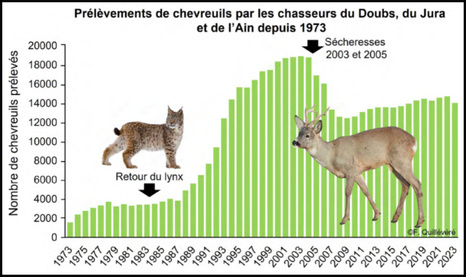
Figure 2 Trends in roe deer hunting – taken from F. Quillévéré, Lynx boréal Newsletter No. 24 SFEPM, December 2025
In the Jura Mountains, the lynx population is larger, at around 219 individuals 150FR+69CH. Through predation and/or their mere presence, which is thought to create a landscape of fear, have they had a limiting effect on deer populations? Has this led to a downward trophic cascade, resulting in a decrease in forest damage caused by these deer? Regarding roe deer, the lynx's preferred prey, no population decline has been observed, at least not in France. While hunting quotas are not entirely representative of roe deer population dynamics, they nevertheless provide a fairly good approximation. Figure 2 shows that while lynx predation does impact roe deer, it is not the driving force behind the population trends of this species. Bioclimatic hazards (drought) impacting the productivity of the environment could be the dominant factors. The presence of other ungulate species, particularly the chamois, a substitute prey, further complicates the situation, not to mention the antagonistic relationship with the red fox.
A lynx's territory is too vast to be entirely contained within a protected area free from human activities such as forestry, hunting, livestock farming, and recreational uses (hiking, trail running, skiing, etc.). In this type of landscape, typical of the southern half and most of the northern half of the European continent, the limiting effect of the predator's mere presence is also absent.
This effect creates a landscape of fear, preventing prey from feeding properly by forcing them to be more vigilant and/or excluding them from favorable but overly exposed feeding areas. It has been hypothesized that this creation of a landscape of fear has a limiting effect on prey that may even exceed actual predation. As with wolves in similar landscapes heavily influenced by human activity, the lynx does not have this effect on roe deer. Indeed, in a study conducted in the Bavarian forest bordering the Czech Republic, Van Beeck Calkoen et al. (2022) showed that differences in browsing intensity were more closely linked to the perceived risk associated with human activities (namely recreational activities, hunting intensity, and human settlements) than to the perceived predation risk from lynx. “Our results therefore indicate that, despite a high abundance of lynx in the study area (Palmero et al., 2021), the risk posed by this large ambush predator, unlike that posed by human activities, did not produce a measurable cascade of differences in browsing intensity.”
In our mountain ranges at least, the Eurasian lynx does not trigger a trophic cascade that, by limiting primary consumers, would preserve plants and leaves, tree buds and bark, spontaneous regeneration, and the biodiversity of the shrub and herbaceous layers of the forests. At least not in that way. But it could still play a key role in structuring an ecosystem along another path, a different kind of cascade.
No, wolves and lynxes contribute very little to forest regeneration, and in France even less so than elsewhere.
The lynx, killer of foxes, savior of grouse and many others?
A lynx's territory is too vast to be entirely contained within a protected area free from human activities such as forestry, hunting, livestock farming, and recreational uses (hiking, trail running, skiing, etc.). In this type of landscape, typical of the southern half and most of the northern half of the European continent, the limiting effect of the predator's mere presence is also absent.
This effect creates a landscape of fear, preventing prey from feeding properly by forcing them to be more vigilant and/or excluding them from favorable but overly exposed feeding areas. It has been hypothesized that this creation of a landscape of fear has a limiting effect on prey that may even exceed actual predation. As with wolves in similar landscapes heavily influenced by human activity, the lynx does not have this effect on roe deer. Indeed, in a study conducted in the Bavarian forest bordering the Czech Republic, Van Beeck Calkoen et al. (2022) showed that differences in browsing intensity were more closely linked to the perceived risk associated with human activities (namely recreational activities, hunting intensity, and human settlements) than to the perceived predation risk from lynx. “Our results therefore indicate that, despite a high abundance of lynx in the study area (Palmero et al., 2021), the risk posed by this large ambush predator, unlike that posed by human activities, did not produce a measurable cascade of differences in browsing intensity.”
In our mountain ranges at least, the Eurasian lynx does not trigger a trophic cascade that, by limiting primary consumers, would preserve plants and leaves, tree buds and bark, spontaneous regeneration, and the biodiversity of the shrub and herbaceous layers of the forests. At least not in that way. But it could still play a key role in structuring an ecosystem along another path, a different kind of cascade.
No, wolves and lynxes contribute very little to forest regeneration, and in France even less so than elsewhere.
The lynx, killer of foxes, savior of grouse and many others?
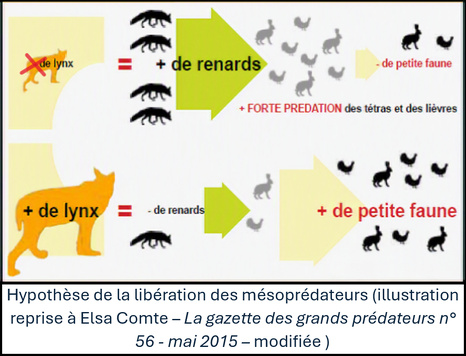
Predation by predators on other predators, whether or not they are consumed, is called guild predation. Its existence is well documented in the case of the lynx. The lynx, a large predator at the top of the food chain, kills mesopredators at a lower level: the red fox and the pine marten. The so-called "mesopredator release" hypothesis states that the disappearance or decline of a large predator at the top of the food chain (apex predator) can lead to an increase in the population of lower-level predators (mesopredators), thereby increasing pressure on their prey and reducing their numbers. This is considered a key ecosystem function with cascading impacts on herbivorous prey. As summarized by Bodil Elmhagen et al (2007), "The concept of mesopredator release has generated considerable interest in conservation biology to explain abnormally high mesopredator abundances and declines in prey abundance or diversity. It has also served as an argument in favor of restoring top predator populations to regain pristine ecosystem structures."
Let's first dispel this hope of finding "pristine" ecosystems, in balance thanks to the reintroduction of large predators. Such pristine ecosystems, that is, without any trace of human activity, do not exist, or at least are extremely rare. Furthermore, if we expect them to be in balance when we now know that dynamic disequilibrium is the norm, they are nothing but myths. Even if, on a much more modest scale, the goal is simply to return to an ecosystem like the one that existed before the removal of large predators, it is far from certain that this will be achieved. We saw earlier the situation for wolves in emblematic locations in America and for lynx in Europe, and for the trophic cascades that have a direct effect on primary consumers. Their very existence is, to say the least, uncertain. This section will examine the supposed systemic effects of predator release and the return or reintroduction of the Eurasian lynx.
From the Middle Ages onward, in many regions of continental Europe, Eurasian lynx populations declined dramatically, dwindling to near extinction. According to the mesopredator liberation hypothesis, by killing mesocarnivores, particularly foxes, and/or creating a "landscape of fear," lynxes limit their predation on herbivorous prey. Fox populations then increase because they are no longer limited by predation or even the presence of lynx. These foxes and other mesopredators would then have exerted predatory pressure on the primary consumers judged excessive and responsible for the decline in bird populations, particularly those of the capercaillie, black grouse, lapwing, but also those of the mountain hare.
The natural return or relocation of lynx should allow for the restoration of populations of these primary consumers by limiting the fox population, which, in the absence of the lynx, occupied the top of the food chain according to the diagram above, which represents a different type of trophic cascade than the previous one. This does not appear to be the case.
According to Pasanen-Mortensen et al. (2013), the return of the lynx would limit fox populations on a continental scale, maintaining low red fox densities by preventing them from responding positively to variations in resource abundance and climate change that are favorable to the lynx. This may have been the case in Finland where, in certain contexts, this type of cascade appeared to occur (Helldin et al., 2006). It is difficult to assume that this is still the case, even in this country where the fox is expanding (Hoffmann et al., 2016).
While the return of the lynx may have led to a reduction in the fox population, coupled with a resurgence in the capercaillie population, this effect was either temporary or very limited in scope. Despite a significant lynx presence, the red fox is expanding its range further north on the continent, encroaching on the Arctic fox's territory. This adds to the threat posed to the Arctic fox species by current climate change, which the red fox benefits from despite the presence of a substantial lynx population, contrary to what would be expected if the theory of mesopredator liberation were valid. Cold weather, and particularly harsh winters, are a limiting factor for the red fox. Conversely, climate change allows it to expand its territory. Lynx present or not, it benefits contrary to what some studies "suggested". For example, Pasanen-Mortensen et al. (2013) went so far as to suggest that "the lynx could play an important ecological role by mitigating the response of red foxes to climate-related changes in resource availability in the face of global warming". The opposite is true. Benefiting from milder winters, the red fox is expanding its territory at the expense of the Arctic fox. The culling of red foxes in northern Finland, undertaken to try to preserve the Arctic fox, demonstrates that if the lynx has any impact, it is marginal.
Enlisting the lynx in the major issue of this early century ─ climate change ─ making it a factor in adaptation and resilience, was a bold move, especially since, in a 2007 article, Elmhagen et al. showed that this type of top-down control of foxes had very weak effects in human-modified systems and in low-productivity systems, such as those found in the northern boreal zones of Finland and Sweden. They concluded that "It has been suggested that overabundant mesopredator populations should be managed by reintroducing apical predators to restore top-down control (Terborgh et al. 1999). We believe this is a simplistic conclusion!" And they elaborate on three reasons to support their claim. First, even if reintroduced lynx kills foxes, this will not be enough if the environment offers them an abundance of prey and dens for reproduction (lack of bottom-up regulation to counteract the top-down regulation exerted by the lynx). Second, even assuming it works in one case, it cannot be generalized to all cases: the effectiveness of top-down regulation (fox predation by lynx) and bottom-up regulation (number of prey and available dens) depends on the bioclimatic region and the underlying dynamics between mesopredators and prey; we cannot assume that the reintroduction of large predators will have the same impact in all ecosystems. Finally, there would need to be a certain density of lynx that would lead to conflicts over land use (hunting, livestock farming, skiing, hiking, road traffic, etc.). According to the authors, there are no real trophic cascades in Europe due to a lack of sufficiently large, undisturbed territories, like those that exist in the USA.
One might wonder how the main author of this 2007 article, Bodil Elmhagen, could have co-signed the one by Marianne Pasanen-Mortensen (2013) cited above, with the peremptory title "Where lynx prevail, foxes will fail" Moreover, four years later, in an article co-authored by Marianne Pasanen-Mortensen and Bodil Elmhagen, we read that "the recolonization or restoration of predator populations above their historical levels would not be sufficient to compensate for widespread climate and land-use changes, which have eased resource constraints for many herbivores and mesopredators." This is difficult to reconcile with the conclusion of the 2013 article, which I quote again: "the lynx could play an important ecological role in mitigating the response of red foxes to climate-related changes regarding resource availability in the face of global warming!” Of course, to resolve the contradiction, it suffices to specify that this last proposition only applies to “ecosystems left to their own devices” … Ecosystems that may not exist anywhere on Earth, and certainly not in Europe, therefore not in France.
The two articles cited by Pasanen-Mortensen (2013 and 2017) claim to provide population trends for lynx and red foxes on a continental scale, with the 2017 article covering a period from the 1860s to 2050, which implies reconstructions and projections. One cannot help but be skeptical about the value of the "results" when considering the quality of the raw data on which they are based, its incompleteness, lack of homogeneity, limited precision, the processing and selection it undergoes to become the basis of these studies, and the not always explicit assumptions this entails, as well as the choices made in selecting one dataset over another, which cannot entirely rule out arbitrariness.
While the authors certainly employ sophisticated statistical techniques, these have their limitations. As Thomas Huxley wrote, “Mathematics may be compared to a mill of exquisite workmanship, which grinds you stuff of any degree of fineness; but, nevertheless, what you get out depends upon what you put in; and as the grandest mill in the world will not extract wheat-flour from peas, so pages of formulae will not get a definite result out of loose data.” (1869, in Geological reform, included in Discourses: Biological & Geological, Essay by Thomas Huxley, Macmillan and co, London 1894, p. 333). In many conservation biology articles, one can ask the question: what do statistical treatments process, good wheat or pea pods?
Helldin (2006) observed that in the Swiss Jura Mountains, populations of Eurasian lynx and red foxes increased simultaneously. In France, the fox population is stable. Despite their position at the top of food chains, lynx populations will never be dense enough to play a significant regulatory role in the heavily human-modified ecosystems of "old Europe." Furthermore, the situation is much more complex because the trophic relationships between primary producers and lynx are not simply secondary effects of interference between large and mesopredators; they also involve direct predation. Indeed, it should not be forgotten that, like the fox or the pine marten, the lynx is also a predator of both species of grouse, ptarmigan, and hares.variables, small game whose populations conservation biologists hope, along with state authorities, will recover.
Let's first dispel this hope of finding "pristine" ecosystems, in balance thanks to the reintroduction of large predators. Such pristine ecosystems, that is, without any trace of human activity, do not exist, or at least are extremely rare. Furthermore, if we expect them to be in balance when we now know that dynamic disequilibrium is the norm, they are nothing but myths. Even if, on a much more modest scale, the goal is simply to return to an ecosystem like the one that existed before the removal of large predators, it is far from certain that this will be achieved. We saw earlier the situation for wolves in emblematic locations in America and for lynx in Europe, and for the trophic cascades that have a direct effect on primary consumers. Their very existence is, to say the least, uncertain. This section will examine the supposed systemic effects of predator release and the return or reintroduction of the Eurasian lynx.
From the Middle Ages onward, in many regions of continental Europe, Eurasian lynx populations declined dramatically, dwindling to near extinction. According to the mesopredator liberation hypothesis, by killing mesocarnivores, particularly foxes, and/or creating a "landscape of fear," lynxes limit their predation on herbivorous prey. Fox populations then increase because they are no longer limited by predation or even the presence of lynx. These foxes and other mesopredators would then have exerted predatory pressure on the primary consumers judged excessive and responsible for the decline in bird populations, particularly those of the capercaillie, black grouse, lapwing, but also those of the mountain hare.
The natural return or relocation of lynx should allow for the restoration of populations of these primary consumers by limiting the fox population, which, in the absence of the lynx, occupied the top of the food chain according to the diagram above, which represents a different type of trophic cascade than the previous one. This does not appear to be the case.
According to Pasanen-Mortensen et al. (2013), the return of the lynx would limit fox populations on a continental scale, maintaining low red fox densities by preventing them from responding positively to variations in resource abundance and climate change that are favorable to the lynx. This may have been the case in Finland where, in certain contexts, this type of cascade appeared to occur (Helldin et al., 2006). It is difficult to assume that this is still the case, even in this country where the fox is expanding (Hoffmann et al., 2016).
While the return of the lynx may have led to a reduction in the fox population, coupled with a resurgence in the capercaillie population, this effect was either temporary or very limited in scope. Despite a significant lynx presence, the red fox is expanding its range further north on the continent, encroaching on the Arctic fox's territory. This adds to the threat posed to the Arctic fox species by current climate change, which the red fox benefits from despite the presence of a substantial lynx population, contrary to what would be expected if the theory of mesopredator liberation were valid. Cold weather, and particularly harsh winters, are a limiting factor for the red fox. Conversely, climate change allows it to expand its territory. Lynx present or not, it benefits contrary to what some studies "suggested". For example, Pasanen-Mortensen et al. (2013) went so far as to suggest that "the lynx could play an important ecological role by mitigating the response of red foxes to climate-related changes in resource availability in the face of global warming". The opposite is true. Benefiting from milder winters, the red fox is expanding its territory at the expense of the Arctic fox. The culling of red foxes in northern Finland, undertaken to try to preserve the Arctic fox, demonstrates that if the lynx has any impact, it is marginal.
Enlisting the lynx in the major issue of this early century ─ climate change ─ making it a factor in adaptation and resilience, was a bold move, especially since, in a 2007 article, Elmhagen et al. showed that this type of top-down control of foxes had very weak effects in human-modified systems and in low-productivity systems, such as those found in the northern boreal zones of Finland and Sweden. They concluded that "It has been suggested that overabundant mesopredator populations should be managed by reintroducing apical predators to restore top-down control (Terborgh et al. 1999). We believe this is a simplistic conclusion!" And they elaborate on three reasons to support their claim. First, even if reintroduced lynx kills foxes, this will not be enough if the environment offers them an abundance of prey and dens for reproduction (lack of bottom-up regulation to counteract the top-down regulation exerted by the lynx). Second, even assuming it works in one case, it cannot be generalized to all cases: the effectiveness of top-down regulation (fox predation by lynx) and bottom-up regulation (number of prey and available dens) depends on the bioclimatic region and the underlying dynamics between mesopredators and prey; we cannot assume that the reintroduction of large predators will have the same impact in all ecosystems. Finally, there would need to be a certain density of lynx that would lead to conflicts over land use (hunting, livestock farming, skiing, hiking, road traffic, etc.). According to the authors, there are no real trophic cascades in Europe due to a lack of sufficiently large, undisturbed territories, like those that exist in the USA.
One might wonder how the main author of this 2007 article, Bodil Elmhagen, could have co-signed the one by Marianne Pasanen-Mortensen (2013) cited above, with the peremptory title "Where lynx prevail, foxes will fail" Moreover, four years later, in an article co-authored by Marianne Pasanen-Mortensen and Bodil Elmhagen, we read that "the recolonization or restoration of predator populations above their historical levels would not be sufficient to compensate for widespread climate and land-use changes, which have eased resource constraints for many herbivores and mesopredators." This is difficult to reconcile with the conclusion of the 2013 article, which I quote again: "the lynx could play an important ecological role in mitigating the response of red foxes to climate-related changes regarding resource availability in the face of global warming!” Of course, to resolve the contradiction, it suffices to specify that this last proposition only applies to “ecosystems left to their own devices” … Ecosystems that may not exist anywhere on Earth, and certainly not in Europe, therefore not in France.
The two articles cited by Pasanen-Mortensen (2013 and 2017) claim to provide population trends for lynx and red foxes on a continental scale, with the 2017 article covering a period from the 1860s to 2050, which implies reconstructions and projections. One cannot help but be skeptical about the value of the "results" when considering the quality of the raw data on which they are based, its incompleteness, lack of homogeneity, limited precision, the processing and selection it undergoes to become the basis of these studies, and the not always explicit assumptions this entails, as well as the choices made in selecting one dataset over another, which cannot entirely rule out arbitrariness.
While the authors certainly employ sophisticated statistical techniques, these have their limitations. As Thomas Huxley wrote, “Mathematics may be compared to a mill of exquisite workmanship, which grinds you stuff of any degree of fineness; but, nevertheless, what you get out depends upon what you put in; and as the grandest mill in the world will not extract wheat-flour from peas, so pages of formulae will not get a definite result out of loose data.” (1869, in Geological reform, included in Discourses: Biological & Geological, Essay by Thomas Huxley, Macmillan and co, London 1894, p. 333). In many conservation biology articles, one can ask the question: what do statistical treatments process, good wheat or pea pods?
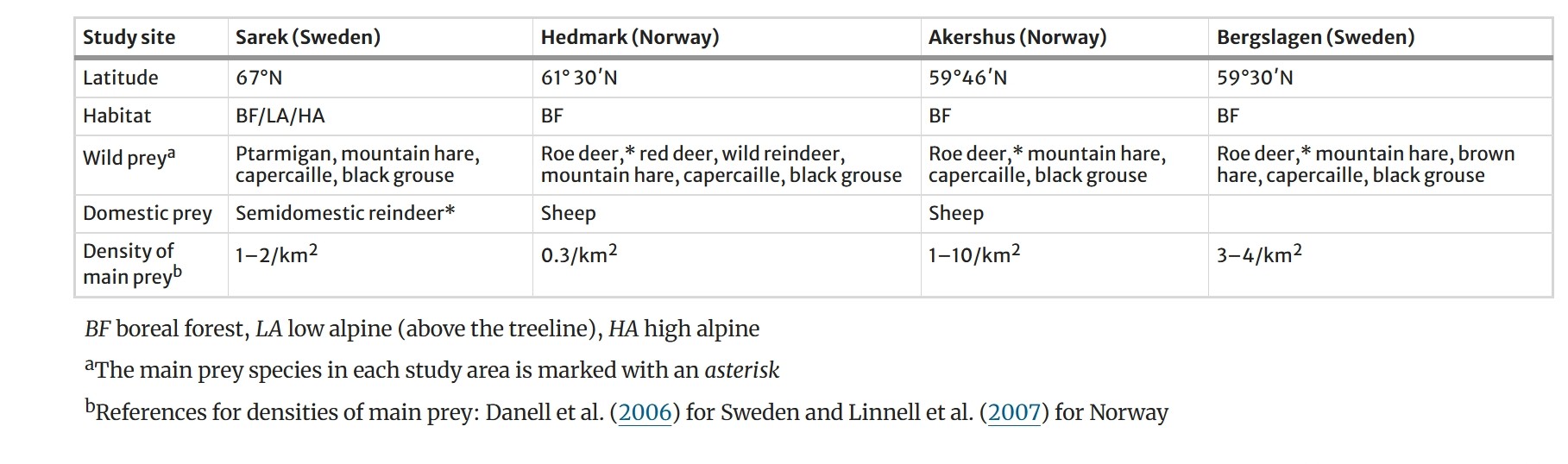
Tableau 1Adapted from Nilsen et al.; 2012
This comparative table of the lynx's diet at different sites in Scandinavia reveals variations in its diet, as it can adapt when its preferred prey is scarce, as seen at the Sarex site in northern Sweden. It should also be noted that, although small games are not their preferred prey, Lynx does not disdain small games. It therefore competes with mesopredators for this prey. If its predation on this game is lower, it is probably not because it is a less skilled hunter than the fox, for example. Rather, it is because the fox population density is much higher than that of the lynx (Elmhagen et al., 2010). One might wonder what the situation would be in our regions if lynx populations were large enough to have a lasting downward effect on the food chain. It is not certain that it would then have a positive effect on grouse, ptarmigan and brown hares as variables, not to mention sheep which are also on the wolf's menu. In the taiga of Scandinavia, Finland, and neighboring Russia in northern Europe, the lynx population is substantial, the grouse population appears generally stable, and the fox population is expanding northward, on the margins of the tundra are becoming shrubby due to climate change. These three species are classified as LC on the IUCN Red List, meaning their status is not of concern.
This does not mean that there are no fluctuations in population sizes, which can vary significantly for various reasons. For example, in Fennoscandia, small rodent populations (voles, lemmings) fluctuate cyclically every 3 to 4 years. During "rodent years," these rodents are the preferred, almost exclusive, prey of mesopredators (foxes, martens, birds of prey), and capercaillie populations increase. Conversely, during years without rodents, mesopredators prey on capercaillie eggs and chicks, causing populations to decline. These populations then recover during the following cycle (Angelstam et al. 1984; Butet et al. 2001).
In western and central Europe, the situation is different; the capercaillie is barely surviving, and while the black grouse fares somewhat better, it is still not very bright (for details, see the OFB statistics). In any case, for the capercaillie, the black grouse, and the ptarmigan, predatory pressure from foxes, beech martens, birds of prey, and a fortiori Lynx predation is not the primary cause of the poor conservation status of these populations in Western Europe. Given the rarity of these birds in this region, such predation is anecdotal. Except when wildlife managers decide to "reinforce" capercaillie populations, as was the case in the Vosges Mountains in 2024 and 2025. Released birds, disoriented in an unfamiliar environment, generally end up being preyed upon, without anyone really knowing who the culprit is. The pine marten is strongly suspected, but it could just as easily be a fox or a wild boar that caused the nests to fail, or perhaps one of the two or three lynxes that still frequent this territory! The capercaillie is on its menu; a lynx was photographed in the Vaud Jura mountains with this bird in its mouth; and, it should be remembered, one did indeed attack a domestic hen in a henhouse in a village in the Vosges. For these birds, as for the lynx, the main cause of their decline or their difficulty surviving where they have been released is the transformation of forests by modern forestry, habitat fragmentation, human disturbance, and climate change, which, if it were to continue, would undoubtedly reshuffle the deck.
Lynx predation on foxes is strange. They reportedly kill foxes in all regions where they have returned. In some northern areas of Fennoscandia, they kill enough to limit the fox population, which has declined. Yet they eat very few foxes, if any at all. Conservation biologists hypothesize that this is to eliminate competition. According to Génot (2026), lynxes eliminate foxes and other mesopredators to avoid predation on their young, but he does not cite any specific examples.
Sources suggest that rather than protecting their young, which are cared for solely by the female, the lynx may be trying to protect itself from kleptoparasitism by foxes and other scavengers that steal its prey. After killing a roe deer or chamois, the lynx eats only part of it, hides the carcass nearby, and returns to feed on it for several days or even weeks, provided that scavengers haven't already taken advantage. Among these scavengers, the fox is particularly diligent. But this is a risky endeavor, and the lynx shows no mercy to freeloaders! Hainard (1987) indicates that "the lynx often kills the fox that follows it in order to share its prey." Based on analysis of the excrement of red foxes living in a boreal forest in south-central Sweden, in the study area of the Grimsö research station, Helldin & Danielsson 2007 showed that the carcasses of roe deer killed by lynx ensured the fox a stable food supply in winter, independent of rodent fluctuations and that, even in summer, these carcasses supplemented their diet.
It is not certain that this stable and continuous food supply will allow for sufficient reproduction to compensate for the additional mortality caused to fox populations; this must depend on the context. In any case, this kleptoparasitism is further proof that the presence of the feline does not create a landscape of fear, even where it is sufficiently abundant and kills enough prey to feed itself and the scavengers who force it to hunt more often.
In summary, the return of the lynx to areas where it once lived (in the recent or more distant past) could theoretically indirectly guarantee the health of grouse and other terrestrial breeding populations by limiting mesopredator populations, both through direct predation and, more importantly, by establishing a sufficiently effective "landscape of fear" to require only a small number of felines to ensure this decline. However, this top-down trophic regulation is, to say the least, greatly diminished in heavily human-modified landscapes. Even if these landscapes include pockets of preserved or feral nature, they are multi-use and remain too fragmented and too small for this carnivore. Another way of presenting things, more radical but more in line with reality, would be to conclude that there are no keystone species in these systems, at the very least that the lynx is not one, any more than are the wolves here or in the Irish River (IRNP) and Yellowstone (YNP) national parks in the USA, which are nevertheless sufficiently vast and little anthropized territories. These large predators ─ lynx, wolf, and bear ─ are endangered in France and are the subject of very expensive conservation programs. What a boon it would be if these programs could be justified by making them keystone species! This notion, while lacking a solid empirical and theoretical foundation, has many supporters. It "suggests that attention and efforts could thus be directed toward a small number of keystone species, neglecting all the others that depend on them directly or indirectly,” emphasizes R. Barbaut, who explains why this approach can be appealing and denounces its dangers: “One understands the initial fascination with a miracle cure: the keystone species, what a dream! The bulk of research efforts and resources in conservation or restoration focus on a small number of species threatened with extinction: if these are keystone species, then there you have an unexpected turn around. Otherwise, we will have to talk about the arbitrary nature of the choices... and the overall low effectiveness of such a strategy.” (Emphasis added). He continues, “But as we have seen, defining keystone species is not a simple matter, nor as objective as one might hope. Worse: the same species recognized as keystone here will not be so there [...]. It is therefore a dangerous illusion. It is indeed dangerous to generalize too quickly, based on fragmentary or biased information: it means forgetting the history of ecological systems and therefore their specificity. And when we consider, on the other hand, the social and human context—it is humankind that restores, for itself—it becomes even more complicated.” One could not put it better! And even if, ultimately, the author does not completely reject the concept, it cannot be said that it emerges unscathed from this critique.
In conclusion to this section, the notion of a keystone species raises at least as many problems as it is intended to solve. Even if we accept the existence of keystone species, in France as in much of the European continent, neither the lynx nor the wolf are keystone species. They are not keystone species either directly or through the mediation of predation interference between large and small predators. Therefore, one of the main justifications for their reintroduction or the reinforcement of their populations is unfounded. Simply put, those species that are here, whether they returned naturally or artificially, are here. They must be respected, but not sanctuarised.
A holey umbrella
An umbrella species is a species whose conservation provides protection to a large number of species that naturally coexist with it (Roberge 2004). It is important to remember that this was initially and primarily a management tool (Simberloff 1998, Roberge 2004) intended to address the difficulty of controlling and managing all aspects of a territory's biodiversity. Concentrating limited human, material, and financial resources on the conservation of a single species would allow for the effective preservation not only of that species but also of all the known and unknown, endangered and non-endangered species that live alongside it. This, at least, is the hope underlying the selection of a species as an umbrella species. This tool has been used to determine the minimum area to be protected, to define networks of reserves on a larger geographical scale, and to select sites for preserve according to whether they contain one or more of these species considered as umbrella species, etc.
In its classic form, the umbrella species concept refers to the minimum area requirements for a population, assuming that if sufficient space is preserved for species needing very large territories, all species living in those territories will be preserved. Since large organisms, in most cases, require these vast spaces, they, and more specifically large carnivores, are most often chosen as umbrella species. Thus explained, this concept enjoys great popularity among protected area managers, nature conservation associations, and, to a lesser extent, among conservation biologists, where, after a period of more or less enthusiastic acceptance, some have now begun to offer severe criticism (Simberloff 1998, Lindenmayer et al. 2002, Roberge & Angelstam 2004, etc.).
The lynx would be an umbrella species of this type according to Gaillard et al. 2012, (cited above): “The protection of the lynx and its habitat entails, by extension, the safeguarding of a large area covering a diversity of landscapes, environments, and even ecosystems, and by the same token, species found there” However, the argument underlying this notion of an umbrella species, which is repeated here uncritically in the case of the lynx, is disconcertingly simplistic. Within the protected area, other species will surely find enough to satisfy their own needs! "Often whether many other species will really fall under the umbrella is a matter of faith rather than research" (Simberloff 1998). Moreover, choosing an umbrella species should eliminate the need for research which, if feasible, would render unnecessary the detour through such a species and the selection problems it raises. In fact, this disregards the habitat requirements of other species. Some have specific needs that will not necessarily be met simply because they are located in an area protected by the umbrella species, which has its own specific requirements.
For example, more than vast forests, the Western Capercaillie needs uneven woodlands that provide clearings for singing areas where males display in preparation for mating, and absolute tranquility during breeding. The canopy must be open, with low overhang, so that it can take off or land through the branches without injury. Given its weight and the need for protection from terrestrial predators, it requires old trees with sturdy branches as roosts. It also needs conifers, whose needles it eats as its main and almost exclusive food source in winter, and patches of bilberry bushes that provide berries and leaves for adult food and insects for the birds chick food (For more details, see Leclercq et al. 2018).
The lynx, however, does not have the same requirements; tree species is not a key factor as long as the forest contains sufficient prey with windthrow, dense regeneration areas, edges, and rocky outcrops where it can hunt and reproduce. The capercaillie's home range is smaller than the lynx's but is not necessarily included within it. The two ranges may simply overlap, or even be separate (Lindenmayer et al. 2002 for a presentation of the various theoretically possible scenarios).
Reintroductions and releases to "reinforce" the population of the lynx, designated as a keystone species, have been carried out in most mountain ranges of Western and Central Europe, and further reintroductions are planned in France. However, the "intensive management" of this keystone species, recommended by "scientific experts," is "a contradiction in terms" because the rest of the protected community does not benefit from these actions (Simberloff 1998). Reinforcing lynx populations in the Vosges forest will not benefit the capercaillie, which could even suffer as a result, becoming the target of opportunistic predation.
The Western Capercaillie, due to its specific habitat requirements, is also classified as an "umbrella species." Conservation efforts for this species necessitate preserving the old-growth forests where their habitats are located by the same the species found there. At least in theory, because in practice… That's not at all what happens, as we can see in the Vosges Mountains where the species is critically endangered and where several releases have been carried out to bolster the population, with, as I mentioned, poor success, as the introduced birds were preyed upon. Since these birds provided an additional food source for foxes and martens, one might argue that the efforts to maintain a Capercaillies population have actually benefited the mesopredators coexisting in this mountain range. But, of course, that's not how the managers see things! To have any chance of success, releases must be accompanied by predator control. Under these conditions, "the one-year survival rate is between 30 and 80%" (Génot 2026). Just as game wardens manage game by eliminating predators, to successfully sustain the capercaillie population by reinforcing it through releases, managers of sensitive areas must also eliminate the pine marten, the red fox, and the Eurasian eagle-owl, which are therefore not at all protected by the umbrella species protection measures. Quite the opposite, in fact! The managers of the Ballons des Vosges Regional Natural Park did not dare to implement such control. "After three nests failed due to predation, the PNRBV opted for the use of ultrasonic deterrent devices to protect nests." rather than predator control, which would provoke a strong reaction from nature preservation groups,” says JC Génot, who regrets the absence of the lynx, which would have done the job of population control. He forgets that the lynx, too, doesn't disdain the capercaillie, which it occasionally eats (see the table above, taken from Nilsen et al., 2012).
In short, we must choose what we want to preserve and why: the lynx, the capercaillie, or the remaining fragments of old-growth forests and the connectivity of natural or semi-natural areas. If it's the latter, we might as well do it directly without resorting to an umbrella species, most often chosen from among charismatic species or those made to appear so by the marketing campaigns of reintroduction programs. Moreover, the choice of which species to promote from among all known species residing in a given area can only be arbitrary if, following Lindenmayer et al. (2002), we generalize the results obtained by Andelman and Fagan (2000). These results were obtained from databases on the biodiversity of coastal vegetation in Southern California, the Columbia Plateau ecoregion, and the continental United States. They evaluated the effectiveness of umbrella species and other taxonomically based substitution systems. Their results are rather disappointing for managers who relied on these species to establish their conservation policies: none of these systems would allow for the coverage of more species or better habitat protection than randomly selected species. Therefore, as Simberloff (1998) stated: "For lack of anything better, often vertebrate species are chosen as indicators simply because they are so charismatic that a manager feels obliged to monitor them anyway and nourishes the vague hope that such a 'flagship species' […] will fortuitously reflect the health of the entire system”.
But why make a detour through an umbrella species, or what is considered such, if we are simply trying to preserve the old-growth forests of our mountain ranges or ensure the connectivity of semi-natural or natural environments? Would we stop demanding wildlife crossings if there were no lynx? The answer is obviously no, since they have been built on highways crossing forests where this species was neither present nor expected. The public can be made aware and accept that a portion of their taxes goes towards protecting biodiversity without needing to highlight a lynx, a wolf, or some other animal to raise funds. The lynx is considered an umbrella species simply because it needs a large home range, which is a very weak and insufficient justification. But let's grant it! The argument justifying the reintroduction of the lynx or the reinforcement of its populations in France because it is an umbrella species is only as good as this concept is as a tool for biodiversity conservation and ecosystem restoration, which is to say, very little. In short, something else must be found to rationally justify all these plans aimed at perpetuating its presence in France, its strictly protected status in the European Union, while globally it is only of "least concern," exactly like its enemy, the fox, which is nevertheless classified as a species of invasive alien species (ESAD) in France, and therefore shot, trapped, and dug out of its burrow in all seasons. The fox wants to eat the chicken, I defend the chicken: GOOD / The lynx wants to eat the chicken, I defend the chicken: NOT GOOD
With all the accolades that lynx conservation plans award to this feline, we are wallowing in arbitrariness and inconsistency. The lynx, as a keystone species, is supposed to preserve trees, shrubby and herbaceous underlayers through trophic cascades by preying on roe deer, but at the same time, these roe deer are supposed to be protected by this same lynx as an umbrella species since they live in the same preserved space as it.
Using rigorous mathematical models of the lynx-roe deer relationship, Carpentier et al. (2026) demonstrated that lynx predation on roe deer remains consistently high, even when roe deer density declines, because the lynx specifically targets breeding individuals. This type of predation is additive, not compensatory; that is, it adds to other causes of mortality and does not replace them. This finding contradicts the claims of lynx enthusiasts, such as Bruno Ulrich, vice-president of GEPMA (Group for the Study and Protection of Mammals of Alsace), who told the newspaper 20 Minutes, "But it [the lynx] will attack the weakest and leave the most beautiful and robust prey in the wild, those that interest hunters," repeating a common misconception among French naturalists. Furthermore, Carpentier et al. also show that if the lynx is strictly protected, the roe deer population declines and the overall state of the populations becomes a serious concern in the long term. Cecile Carpentier and her co-authors, including Olivier Gimenez, research director at the CNRS in Montpellier and a leading French expert on large carnivore population models, propose adaptive management through hunting of both species. Therefore, according to these authors, the lynx should not be a sanctuary and should be able to be regulated by hunting under certain conditions (adaptive management), as the system cannot regulate itself without intervention. Human intervention. It is the whole philosophy of rewilding, of restoring a nature which in health self-regulates without human intervention except for a few "boosts" such as reintroductions, which is called into question, certainly on a particular case but which functions, at the very least, as an inconvenient counterexample.
Just because the red fox shares part of the lynx's habitat doesn't mean it's protected in all cases, since there are places in Sweden where this coexistence has reportedly led to a decline in fox populations. This is due to direct predation, but also to the landscape of fear created by the keystone species, which supposedly encourages them to adopt avoidance behaviors that exclude them from the protected territory. Admittedly, this assumption lacks robust evidence and doesn't hold true in heavily human-modified landscapes, as I mentioned earlier, but it shows that the various hypotheses about the lynx are inconsistent. We can't, on the one hand, expect the lynx, as a keystone species, to cause a decline in the fox population and, on the other hand, assume that, as a keystone species, it will protect that population if it is protected! The lynx has more difficulty killing pine martens because the latter find refuge by climbing trees to branches the lynx cannot reach due to its weight, where it is safe. However, in the lynx's case as well, it cannot be said that protecting the lynx also protects the martens. More generally, the lynx's protective umbrella does not protect sympatric mesocarnivores; it kills them or attempts to kill them. They are not protected by the umbrella species. In fact, for protected area managers, as for most conservation biologists, when they claim that protecting an umbrella species protects the species sharing its territory, it must be understood that, whatever they say, this does not apply to ALL the species that live there, only to heritage species and those in danger of extinction that need conservation biologists and ecosystem restorers to ensure their survival, which is not the case for the red fox, the pine marten, the badger or the wild boar, species that manage very well on their own, too well even in the eyes of these doctors of nature and are not in danger, at least not yet….
The red fox is the unloved one. This is evident in almost all articles by European conservation biologists, particularly Fennoscandiens, discussing the lynx/fox pairing with the poorly concealed hope that the lynx will at least rid natural areas of the fox's proliferation. In France, Génot (2026) laments the absence of lynx to regulate the fox population in the Vosges Mountains. The red fox is even considered an invasive species in articles (Norén et al. 2017, for example) that discuss the red fox's expansion from the taiga to the tundra, forgetting that in past episodes of climate warming, the red fox was present in the tundra and is simply returning. Norén et al. (2017) even see the red fox, a new inhabitant of these areas, as a vector of diseases transmissible to the Arctic fox, much like Europeans arriving on the American continent and contaminating the indigenous peoples, who were not immune to serious viral and bacterial infections from Eurasia and Africa: smallpox, influenza, typhus, cholera, plague, mumps, measles, or rubella (on this epidemiological shock, see Havard 2012); in the case of the red fox, these would be sarcoptic mange (Sarcoptes scabiei) and fox tapeworm (Echinococcus multilocularis), Arctic rabies (Arctic Fox Rabies Virus Variant). In fact, things are a bit more complex, and this is where the authors' bias becomes apparent. To summarize: the red fox transmits sarcoptic mange to the Arctic fox, but it is the Arctic fox that infects the red fox in the case of Arctic rabies. At best, the red fox only amplifies the epidemic back in the Arctic fox, which remains the reservoir, particularly in populations with relatively high Arctic fox densities. As for echinococcosis, both are reservoirs before they encounter each other, and they tolerate this infection well, whereas this is not the case for humans (Simon et al. 2019).
Other researchers, particularly Canadian ones, are not as alarmist and consider coexistence possible (Moisan et al. 2023). This highlights the fundamental contradiction that underlies conservation biology. This “crisis discipline,” as Barbaut (1997) termed it, comes to the rescue not of nature itself, but of what it considers nature to be: on the one hand, a nostalgia for wilderness that lends color to the values of ecocentric or biocentric ethics, where the human being, a disruptive element both in the neutral sense of ecology and in the pejorative sense of these ethics, must disappear; and on the other hand, a biodiversity chosen and managed according to the a priori of these "rescuers" who claim to restore it.
Nature, for its part, has no preference for the lynx over the red fox, for the Arctic fox over the red fox, for the lynx over the hen or the human who defends it. Nature has nothing to conserve or preserve. It is as it is and as it will be.
_____________________________________________________________________________________________
For references, please see the original article in French
This does not mean that there are no fluctuations in population sizes, which can vary significantly for various reasons. For example, in Fennoscandia, small rodent populations (voles, lemmings) fluctuate cyclically every 3 to 4 years. During "rodent years," these rodents are the preferred, almost exclusive, prey of mesopredators (foxes, martens, birds of prey), and capercaillie populations increase. Conversely, during years without rodents, mesopredators prey on capercaillie eggs and chicks, causing populations to decline. These populations then recover during the following cycle (Angelstam et al. 1984; Butet et al. 2001).
In western and central Europe, the situation is different; the capercaillie is barely surviving, and while the black grouse fares somewhat better, it is still not very bright (for details, see the OFB statistics). In any case, for the capercaillie, the black grouse, and the ptarmigan, predatory pressure from foxes, beech martens, birds of prey, and a fortiori Lynx predation is not the primary cause of the poor conservation status of these populations in Western Europe. Given the rarity of these birds in this region, such predation is anecdotal. Except when wildlife managers decide to "reinforce" capercaillie populations, as was the case in the Vosges Mountains in 2024 and 2025. Released birds, disoriented in an unfamiliar environment, generally end up being preyed upon, without anyone really knowing who the culprit is. The pine marten is strongly suspected, but it could just as easily be a fox or a wild boar that caused the nests to fail, or perhaps one of the two or three lynxes that still frequent this territory! The capercaillie is on its menu; a lynx was photographed in the Vaud Jura mountains with this bird in its mouth; and, it should be remembered, one did indeed attack a domestic hen in a henhouse in a village in the Vosges. For these birds, as for the lynx, the main cause of their decline or their difficulty surviving where they have been released is the transformation of forests by modern forestry, habitat fragmentation, human disturbance, and climate change, which, if it were to continue, would undoubtedly reshuffle the deck.
Lynx predation on foxes is strange. They reportedly kill foxes in all regions where they have returned. In some northern areas of Fennoscandia, they kill enough to limit the fox population, which has declined. Yet they eat very few foxes, if any at all. Conservation biologists hypothesize that this is to eliminate competition. According to Génot (2026), lynxes eliminate foxes and other mesopredators to avoid predation on their young, but he does not cite any specific examples.
Sources suggest that rather than protecting their young, which are cared for solely by the female, the lynx may be trying to protect itself from kleptoparasitism by foxes and other scavengers that steal its prey. After killing a roe deer or chamois, the lynx eats only part of it, hides the carcass nearby, and returns to feed on it for several days or even weeks, provided that scavengers haven't already taken advantage. Among these scavengers, the fox is particularly diligent. But this is a risky endeavor, and the lynx shows no mercy to freeloaders! Hainard (1987) indicates that "the lynx often kills the fox that follows it in order to share its prey." Based on analysis of the excrement of red foxes living in a boreal forest in south-central Sweden, in the study area of the Grimsö research station, Helldin & Danielsson 2007 showed that the carcasses of roe deer killed by lynx ensured the fox a stable food supply in winter, independent of rodent fluctuations and that, even in summer, these carcasses supplemented their diet.
It is not certain that this stable and continuous food supply will allow for sufficient reproduction to compensate for the additional mortality caused to fox populations; this must depend on the context. In any case, this kleptoparasitism is further proof that the presence of the feline does not create a landscape of fear, even where it is sufficiently abundant and kills enough prey to feed itself and the scavengers who force it to hunt more often.
In summary, the return of the lynx to areas where it once lived (in the recent or more distant past) could theoretically indirectly guarantee the health of grouse and other terrestrial breeding populations by limiting mesopredator populations, both through direct predation and, more importantly, by establishing a sufficiently effective "landscape of fear" to require only a small number of felines to ensure this decline. However, this top-down trophic regulation is, to say the least, greatly diminished in heavily human-modified landscapes. Even if these landscapes include pockets of preserved or feral nature, they are multi-use and remain too fragmented and too small for this carnivore. Another way of presenting things, more radical but more in line with reality, would be to conclude that there are no keystone species in these systems, at the very least that the lynx is not one, any more than are the wolves here or in the Irish River (IRNP) and Yellowstone (YNP) national parks in the USA, which are nevertheless sufficiently vast and little anthropized territories. These large predators ─ lynx, wolf, and bear ─ are endangered in France and are the subject of very expensive conservation programs. What a boon it would be if these programs could be justified by making them keystone species! This notion, while lacking a solid empirical and theoretical foundation, has many supporters. It "suggests that attention and efforts could thus be directed toward a small number of keystone species, neglecting all the others that depend on them directly or indirectly,” emphasizes R. Barbaut, who explains why this approach can be appealing and denounces its dangers: “One understands the initial fascination with a miracle cure: the keystone species, what a dream! The bulk of research efforts and resources in conservation or restoration focus on a small number of species threatened with extinction: if these are keystone species, then there you have an unexpected turn around. Otherwise, we will have to talk about the arbitrary nature of the choices... and the overall low effectiveness of such a strategy.” (Emphasis added). He continues, “But as we have seen, defining keystone species is not a simple matter, nor as objective as one might hope. Worse: the same species recognized as keystone here will not be so there [...]. It is therefore a dangerous illusion. It is indeed dangerous to generalize too quickly, based on fragmentary or biased information: it means forgetting the history of ecological systems and therefore their specificity. And when we consider, on the other hand, the social and human context—it is humankind that restores, for itself—it becomes even more complicated.” One could not put it better! And even if, ultimately, the author does not completely reject the concept, it cannot be said that it emerges unscathed from this critique.
In conclusion to this section, the notion of a keystone species raises at least as many problems as it is intended to solve. Even if we accept the existence of keystone species, in France as in much of the European continent, neither the lynx nor the wolf are keystone species. They are not keystone species either directly or through the mediation of predation interference between large and small predators. Therefore, one of the main justifications for their reintroduction or the reinforcement of their populations is unfounded. Simply put, those species that are here, whether they returned naturally or artificially, are here. They must be respected, but not sanctuarised.
A holey umbrella
An umbrella species is a species whose conservation provides protection to a large number of species that naturally coexist with it (Roberge 2004). It is important to remember that this was initially and primarily a management tool (Simberloff 1998, Roberge 2004) intended to address the difficulty of controlling and managing all aspects of a territory's biodiversity. Concentrating limited human, material, and financial resources on the conservation of a single species would allow for the effective preservation not only of that species but also of all the known and unknown, endangered and non-endangered species that live alongside it. This, at least, is the hope underlying the selection of a species as an umbrella species. This tool has been used to determine the minimum area to be protected, to define networks of reserves on a larger geographical scale, and to select sites for preserve according to whether they contain one or more of these species considered as umbrella species, etc.
In its classic form, the umbrella species concept refers to the minimum area requirements for a population, assuming that if sufficient space is preserved for species needing very large territories, all species living in those territories will be preserved. Since large organisms, in most cases, require these vast spaces, they, and more specifically large carnivores, are most often chosen as umbrella species. Thus explained, this concept enjoys great popularity among protected area managers, nature conservation associations, and, to a lesser extent, among conservation biologists, where, after a period of more or less enthusiastic acceptance, some have now begun to offer severe criticism (Simberloff 1998, Lindenmayer et al. 2002, Roberge & Angelstam 2004, etc.).
The lynx would be an umbrella species of this type according to Gaillard et al. 2012, (cited above): “The protection of the lynx and its habitat entails, by extension, the safeguarding of a large area covering a diversity of landscapes, environments, and even ecosystems, and by the same token, species found there” However, the argument underlying this notion of an umbrella species, which is repeated here uncritically in the case of the lynx, is disconcertingly simplistic. Within the protected area, other species will surely find enough to satisfy their own needs! "Often whether many other species will really fall under the umbrella is a matter of faith rather than research" (Simberloff 1998). Moreover, choosing an umbrella species should eliminate the need for research which, if feasible, would render unnecessary the detour through such a species and the selection problems it raises. In fact, this disregards the habitat requirements of other species. Some have specific needs that will not necessarily be met simply because they are located in an area protected by the umbrella species, which has its own specific requirements.
For example, more than vast forests, the Western Capercaillie needs uneven woodlands that provide clearings for singing areas where males display in preparation for mating, and absolute tranquility during breeding. The canopy must be open, with low overhang, so that it can take off or land through the branches without injury. Given its weight and the need for protection from terrestrial predators, it requires old trees with sturdy branches as roosts. It also needs conifers, whose needles it eats as its main and almost exclusive food source in winter, and patches of bilberry bushes that provide berries and leaves for adult food and insects for the birds chick food (For more details, see Leclercq et al. 2018).
The lynx, however, does not have the same requirements; tree species is not a key factor as long as the forest contains sufficient prey with windthrow, dense regeneration areas, edges, and rocky outcrops where it can hunt and reproduce. The capercaillie's home range is smaller than the lynx's but is not necessarily included within it. The two ranges may simply overlap, or even be separate (Lindenmayer et al. 2002 for a presentation of the various theoretically possible scenarios).
Reintroductions and releases to "reinforce" the population of the lynx, designated as a keystone species, have been carried out in most mountain ranges of Western and Central Europe, and further reintroductions are planned in France. However, the "intensive management" of this keystone species, recommended by "scientific experts," is "a contradiction in terms" because the rest of the protected community does not benefit from these actions (Simberloff 1998). Reinforcing lynx populations in the Vosges forest will not benefit the capercaillie, which could even suffer as a result, becoming the target of opportunistic predation.
The Western Capercaillie, due to its specific habitat requirements, is also classified as an "umbrella species." Conservation efforts for this species necessitate preserving the old-growth forests where their habitats are located by the same the species found there. At least in theory, because in practice… That's not at all what happens, as we can see in the Vosges Mountains where the species is critically endangered and where several releases have been carried out to bolster the population, with, as I mentioned, poor success, as the introduced birds were preyed upon. Since these birds provided an additional food source for foxes and martens, one might argue that the efforts to maintain a Capercaillies population have actually benefited the mesopredators coexisting in this mountain range. But, of course, that's not how the managers see things! To have any chance of success, releases must be accompanied by predator control. Under these conditions, "the one-year survival rate is between 30 and 80%" (Génot 2026). Just as game wardens manage game by eliminating predators, to successfully sustain the capercaillie population by reinforcing it through releases, managers of sensitive areas must also eliminate the pine marten, the red fox, and the Eurasian eagle-owl, which are therefore not at all protected by the umbrella species protection measures. Quite the opposite, in fact! The managers of the Ballons des Vosges Regional Natural Park did not dare to implement such control. "After three nests failed due to predation, the PNRBV opted for the use of ultrasonic deterrent devices to protect nests." rather than predator control, which would provoke a strong reaction from nature preservation groups,” says JC Génot, who regrets the absence of the lynx, which would have done the job of population control. He forgets that the lynx, too, doesn't disdain the capercaillie, which it occasionally eats (see the table above, taken from Nilsen et al., 2012).
In short, we must choose what we want to preserve and why: the lynx, the capercaillie, or the remaining fragments of old-growth forests and the connectivity of natural or semi-natural areas. If it's the latter, we might as well do it directly without resorting to an umbrella species, most often chosen from among charismatic species or those made to appear so by the marketing campaigns of reintroduction programs. Moreover, the choice of which species to promote from among all known species residing in a given area can only be arbitrary if, following Lindenmayer et al. (2002), we generalize the results obtained by Andelman and Fagan (2000). These results were obtained from databases on the biodiversity of coastal vegetation in Southern California, the Columbia Plateau ecoregion, and the continental United States. They evaluated the effectiveness of umbrella species and other taxonomically based substitution systems. Their results are rather disappointing for managers who relied on these species to establish their conservation policies: none of these systems would allow for the coverage of more species or better habitat protection than randomly selected species. Therefore, as Simberloff (1998) stated: "For lack of anything better, often vertebrate species are chosen as indicators simply because they are so charismatic that a manager feels obliged to monitor them anyway and nourishes the vague hope that such a 'flagship species' […] will fortuitously reflect the health of the entire system”.
But why make a detour through an umbrella species, or what is considered such, if we are simply trying to preserve the old-growth forests of our mountain ranges or ensure the connectivity of semi-natural or natural environments? Would we stop demanding wildlife crossings if there were no lynx? The answer is obviously no, since they have been built on highways crossing forests where this species was neither present nor expected. The public can be made aware and accept that a portion of their taxes goes towards protecting biodiversity without needing to highlight a lynx, a wolf, or some other animal to raise funds. The lynx is considered an umbrella species simply because it needs a large home range, which is a very weak and insufficient justification. But let's grant it! The argument justifying the reintroduction of the lynx or the reinforcement of its populations in France because it is an umbrella species is only as good as this concept is as a tool for biodiversity conservation and ecosystem restoration, which is to say, very little. In short, something else must be found to rationally justify all these plans aimed at perpetuating its presence in France, its strictly protected status in the European Union, while globally it is only of "least concern," exactly like its enemy, the fox, which is nevertheless classified as a species of invasive alien species (ESAD) in France, and therefore shot, trapped, and dug out of its burrow in all seasons. The fox wants to eat the chicken, I defend the chicken: GOOD / The lynx wants to eat the chicken, I defend the chicken: NOT GOOD
With all the accolades that lynx conservation plans award to this feline, we are wallowing in arbitrariness and inconsistency. The lynx, as a keystone species, is supposed to preserve trees, shrubby and herbaceous underlayers through trophic cascades by preying on roe deer, but at the same time, these roe deer are supposed to be protected by this same lynx as an umbrella species since they live in the same preserved space as it.
Using rigorous mathematical models of the lynx-roe deer relationship, Carpentier et al. (2026) demonstrated that lynx predation on roe deer remains consistently high, even when roe deer density declines, because the lynx specifically targets breeding individuals. This type of predation is additive, not compensatory; that is, it adds to other causes of mortality and does not replace them. This finding contradicts the claims of lynx enthusiasts, such as Bruno Ulrich, vice-president of GEPMA (Group for the Study and Protection of Mammals of Alsace), who told the newspaper 20 Minutes, "But it [the lynx] will attack the weakest and leave the most beautiful and robust prey in the wild, those that interest hunters," repeating a common misconception among French naturalists. Furthermore, Carpentier et al. also show that if the lynx is strictly protected, the roe deer population declines and the overall state of the populations becomes a serious concern in the long term. Cecile Carpentier and her co-authors, including Olivier Gimenez, research director at the CNRS in Montpellier and a leading French expert on large carnivore population models, propose adaptive management through hunting of both species. Therefore, according to these authors, the lynx should not be a sanctuary and should be able to be regulated by hunting under certain conditions (adaptive management), as the system cannot regulate itself without intervention. Human intervention. It is the whole philosophy of rewilding, of restoring a nature which in health self-regulates without human intervention except for a few "boosts" such as reintroductions, which is called into question, certainly on a particular case but which functions, at the very least, as an inconvenient counterexample.
Just because the red fox shares part of the lynx's habitat doesn't mean it's protected in all cases, since there are places in Sweden where this coexistence has reportedly led to a decline in fox populations. This is due to direct predation, but also to the landscape of fear created by the keystone species, which supposedly encourages them to adopt avoidance behaviors that exclude them from the protected territory. Admittedly, this assumption lacks robust evidence and doesn't hold true in heavily human-modified landscapes, as I mentioned earlier, but it shows that the various hypotheses about the lynx are inconsistent. We can't, on the one hand, expect the lynx, as a keystone species, to cause a decline in the fox population and, on the other hand, assume that, as a keystone species, it will protect that population if it is protected! The lynx has more difficulty killing pine martens because the latter find refuge by climbing trees to branches the lynx cannot reach due to its weight, where it is safe. However, in the lynx's case as well, it cannot be said that protecting the lynx also protects the martens. More generally, the lynx's protective umbrella does not protect sympatric mesocarnivores; it kills them or attempts to kill them. They are not protected by the umbrella species. In fact, for protected area managers, as for most conservation biologists, when they claim that protecting an umbrella species protects the species sharing its territory, it must be understood that, whatever they say, this does not apply to ALL the species that live there, only to heritage species and those in danger of extinction that need conservation biologists and ecosystem restorers to ensure their survival, which is not the case for the red fox, the pine marten, the badger or the wild boar, species that manage very well on their own, too well even in the eyes of these doctors of nature and are not in danger, at least not yet….
The red fox is the unloved one. This is evident in almost all articles by European conservation biologists, particularly Fennoscandiens, discussing the lynx/fox pairing with the poorly concealed hope that the lynx will at least rid natural areas of the fox's proliferation. In France, Génot (2026) laments the absence of lynx to regulate the fox population in the Vosges Mountains. The red fox is even considered an invasive species in articles (Norén et al. 2017, for example) that discuss the red fox's expansion from the taiga to the tundra, forgetting that in past episodes of climate warming, the red fox was present in the tundra and is simply returning. Norén et al. (2017) even see the red fox, a new inhabitant of these areas, as a vector of diseases transmissible to the Arctic fox, much like Europeans arriving on the American continent and contaminating the indigenous peoples, who were not immune to serious viral and bacterial infections from Eurasia and Africa: smallpox, influenza, typhus, cholera, plague, mumps, measles, or rubella (on this epidemiological shock, see Havard 2012); in the case of the red fox, these would be sarcoptic mange (Sarcoptes scabiei) and fox tapeworm (Echinococcus multilocularis), Arctic rabies (Arctic Fox Rabies Virus Variant). In fact, things are a bit more complex, and this is where the authors' bias becomes apparent. To summarize: the red fox transmits sarcoptic mange to the Arctic fox, but it is the Arctic fox that infects the red fox in the case of Arctic rabies. At best, the red fox only amplifies the epidemic back in the Arctic fox, which remains the reservoir, particularly in populations with relatively high Arctic fox densities. As for echinococcosis, both are reservoirs before they encounter each other, and they tolerate this infection well, whereas this is not the case for humans (Simon et al. 2019).
Other researchers, particularly Canadian ones, are not as alarmist and consider coexistence possible (Moisan et al. 2023). This highlights the fundamental contradiction that underlies conservation biology. This “crisis discipline,” as Barbaut (1997) termed it, comes to the rescue not of nature itself, but of what it considers nature to be: on the one hand, a nostalgia for wilderness that lends color to the values of ecocentric or biocentric ethics, where the human being, a disruptive element both in the neutral sense of ecology and in the pejorative sense of these ethics, must disappear; and on the other hand, a biodiversity chosen and managed according to the a priori of these "rescuers" who claim to restore it.
Nature, for its part, has no preference for the lynx over the red fox, for the Arctic fox over the red fox, for the lynx over the hen or the human who defends it. Nature has nothing to conserve or preserve. It is as it is and as it will be.
_____________________________________________________________________________________________
For references, please see the original article in French
Mercredi 5 Août 2026
Commentaires (0)
Profil
Jean-François Dumas

Dernières notes

Galerie






Liste de liens
© 2010 Jean-François Dumas
Toute utilisation de documents issus de ce site doit en mentionner la source.
Création et webmaster : Méker-et-Cie, avec l'éditeur Webzinemaker
Toute utilisation de documents issus de ce site doit en mentionner la source.
Création et webmaster : Méker-et-Cie, avec l'éditeur Webzinemaker